


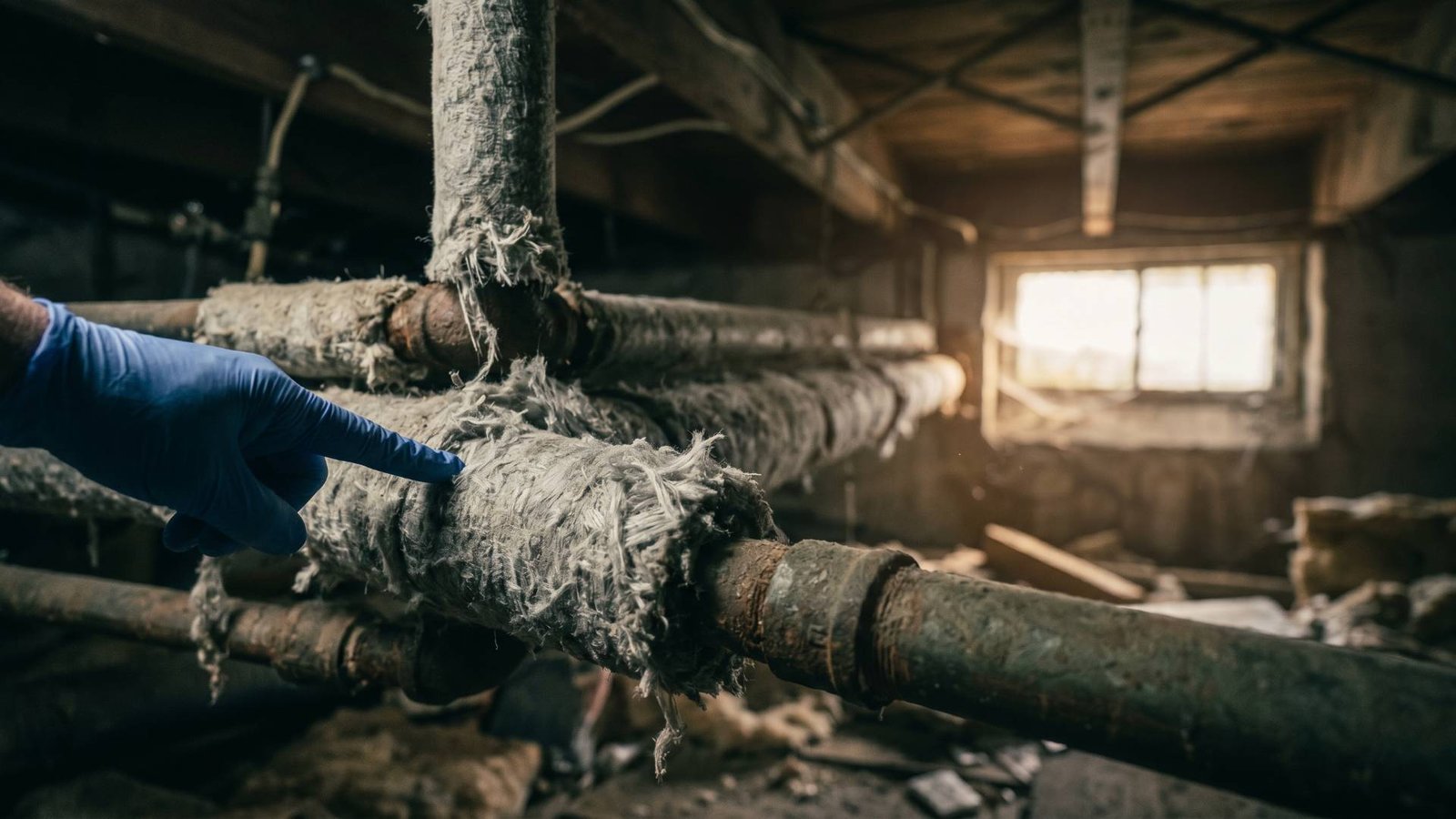
Asbestos is a material many people have heard about, yet few know how to recognize it in real-world settings. Older homes, commercial buildings, and renovation projects often raise questions about what asbestos may look like and where it may be hiding. Because asbestos was used in a wide range of construction materials for decades, identifying potential concerns is not always straightforward. In this article, we’ll walk through the common appearance of asbestos-containing materials, where they are often found, how damaged asbestos may appear, and what steps you should take if you suspect it may be present in a property.
What Does Asbestos Look Like?
One of the biggest challenges with asbestos is that it rarely has a single recognizable appearance. Unlike mold or rust, asbestos is not usually identified by one distinct color, texture, or pattern. Instead, it was mixed into many construction materials to improve strength, insulation, and fire resistance. Because of that, asbestos can appear in several different forms depending on the product it was added to.
For example, asbestos insulation may look soft and fibrous, while asbestos cement products often appear dense and solid. Some materials have a chalky texture, whereas others resemble paper, cloth, or compact tile. In many cases, asbestos-containing products look almost identical to modern non-asbestos alternatives.
Another factor that makes identification difficult is age. Older materials naturally discolor, crack, or wear down over time. As a result, asbestos-containing products can blend in with ordinary signs of aging found in many homes and commercial buildings. That is why we encourage property owners to handle suspicious materials with caution rather than relying on assumptions alone. Even if a material appears harmless, disturbing it through sanding, drilling, cutting, or demolition can release fibers into the surrounding air.
Can You Identify Asbestos by Sight Alone?
In most situations, asbestos cannot be confirmed through visual inspection alone. Although certain materials are more commonly associated with asbestos, appearance alone is not enough to determine whether fibers are actually present.
For instance, two ceiling tiles can look completely identical, even though only one actually contains asbestos. The same applies to insulation, flooring, siding, and roofing materials. Since many manufacturers used similar designs and textures, identifying asbestos by sight becomes unreliable without laboratory analysis.
Another important consideration is that asbestos fibers themselves are microscopic. Even if a material contains asbestos, the fibers are usually embedded within the product and cannot be seen individually without specialized equipment.
Because of this, we generally recommend treating suspicious materials cautiously until testing confirms otherwise. This is especially important in buildings constructed before the 1980s, when asbestos was still widely used in construction products.
What Color Is Asbestos?
Asbestos may appear in several colors depending on the mineral type and the product it was added to. The three most common forms found in construction materials were white, brown, and blue asbestos.
White asbestos, also known as chrysotile, was the most widely used variety. It often had a soft, fibrous appearance and was commonly found in insulation, ceilings, roofing materials, and flooring products.
Brown asbestos, called amosite, was frequently used in insulation boards, cement sheets, and thermal products. Compared to chrysotile, its fibers were straighter and more brittle.
Blue asbestos, or crocidolite, was commonly used in certain insulation applications and industrial materials. Its fibers were thin and sharp, which contributed to its reputation as one of the more hazardous forms of asbestos.
Even so, color alone should never be used to identify asbestos. Many materials were painted, coated, or manufactured in ways that completely concealed their original fiber appearance.
Common Materials That May Contain Asbestos
Asbestos was used in a wide range of construction products because it provided heat resistance, insulation, and durability. As a result, many older properties still contain asbestos-containing materials in hidden or overlooked areas.
Insulation
Older insulation materials are one of the most common sources of asbestos exposure concerns. Pipe insulation, attic insulation, boiler insulation, and wall insulation sometimes contained asbestos fibers to improve heat resistance. These materials may appear chalky, dusty, or fibrous. In some cases, insulation may look loose and fluffy, while in others it appears tightly wrapped around pipes or ductwork.
Ceilings
Textured ceilings installed before the 1980s sometimes contained asbestos. Popcorn ceilings are one of the best-known examples. These surfaces often have a rough, bumpy texture and may begin to crack or flake as they age. Spray-applied ceiling coatings in commercial buildings also frequently contained asbestos for fireproofing purposes.
Flooring
Vinyl floor tiles and adhesives were another common source of asbestos in older buildings. Nine-inch floor tiles are frequently associated with asbestos-containing products, although size alone does not confirm their presence. As flooring deteriorates, tiles may become brittle or separate from the adhesive underneath.
Roofing
Roof shingles, roof felt, and certain cement roofing materials once included asbestos fibers to improve strength and weather resistance. These products often appear dense and cement-like, and over time, exposure to weather can lead to cracking, chipping, or surface deterioration.
Siding
Asbestos cement siding was commonly installed on homes and garages because it resisted heat and moisture. These panels often have a rigid, cement-like appearance and may develop a chalky surface as they age.
Pipe Wrap
Pipe wrap insulation frequently contained asbestos in older homes, schools, and industrial facilities. This material may resemble white cloth, corrugated paper, or layered tape wrapped around pipes and fittings.
What Does Asbestos Insulation Look Like?
Asbestos insulation can vary significantly depending on where it was installed and how it was manufactured. In some cases, loose-fill insulation may appear fluffy or pebble-like and often comes in shades of gray, silver, or brown. Additionally, some vermiculite insulation products have raised concerns, as certain sources were later found to be contaminated with asbestos fibers.
Moving to other common forms, pipe insulation is typically wrapped or layered around plumbing and heating lines. In older buildings, this material may begin to crack, fray, or separate as it deteriorates over time. Similarly, spray-on insulation, which was often used in commercial buildings, has a rough, uneven texture and was commonly applied to ceilings, beams, and structural supports for fire resistance.
Because insulation products are generally more fragile than solid building materials, they can break apart more easily when disturbed. As a result, damaged insulation is more likely to release airborne fibers, especially during renovation or repair work.
What Does Damaged Asbestos Look Like?
Damaged asbestos-containing materials often show visible signs of wear or deterioration. Cracks, crumbling edges, peeling surfaces, and powdery debris are all possible warning signs.
Water damage can also weaken asbestos materials over time. For example, pipe insulation exposed to moisture may start to separate or sag. Ceiling materials may flake or break apart as they age.
The condition of the material matters because intact asbestos products are generally less likely to release fibers. However, once materials are disturbed through renovation, drilling, demolition, or deterioration, fibers may become airborne more easily.
That is why damaged asbestos materials should be approached carefully and evaluated before repairs begin.
How Long Does Asbestos Stay in the Air?
Once asbestos fibers become airborne, they can remain suspended for hours or even days, depending on the environment. Small fibers are especially lightweight, which allows them to circulate through indoor spaces before eventually settling.
Several factors influence how long fibers remain in the air. Ventilation, airflow, humidity, and the amount of material disturbed all play a role. For example, renovation work in an enclosed room may allow fibers to linger longer than they would in a well-ventilated area. Similarly, sweeping or improper cleanup methods may continue redistributing settled fibers into the air.
Because airborne asbestos is usually invisible, contamination can spread without any obvious signs. This is one reason why professional containment and cleanup procedures are important when asbestos-containing materials become damaged.
Does Asbestos Smell?
Asbestos itself is generally odorless, and there is usually no distinct smell that can confirm whether it is present in a material. However, older building materials may produce musty, dusty, or stale odors as they age. Adhesives, water damage, mold growth, and deteriorating insulation can also create smells that people mistakenly associate with asbestos.
Since odor isn’t a reliable indicator, we don’t recommend using smell to identify asbestos-containing materials. A property may contain asbestos even when there are no noticeable odors at all.
Where Is Asbestos Commonly Found in Older Buildings?
Asbestos was widely used in residential, commercial, and industrial construction for decades. Because of that, it may still be found in many older structures today.
In homes, asbestos was commonly used in flooring, ceilings, roofing materials, siding, insulation, and pipe coverings. Garages, basements, attics, and utility areas are often locations where older asbestos products remain in place. Commercial buildings sometimes contain asbestos in boiler rooms, mechanical insulation, fireproofing systems, and ceiling materials. Schools and industrial facilities also historically used asbestos for insulation and fire resistance.
Even buildings that appear updated may still contain asbestos hidden behind walls, above ceilings, or beneath flooring that was installed years ago.
Materials Often Mistaken for Asbestos
Not every older material contains asbestos. In fact, several modern products closely resemble asbestos-containing materials even though they were manufactured without asbestos fibers. Fiberglass insulation is a common example. Although it has a fibrous appearance, fiberglass usually appears pink, yellow, or white and has a softer texture.
Cellulose insulation may also resemble asbestos insulation because it appears loose and gray. However, it is typically made from recycled paper materials. Modern fiber cement boards can also closely resemble older asbestos cement siding. Because visual differences are often subtle, testing remains the most reliable method for confirmation.
How To Identify Asbestos
Identifying asbestos typically involves evaluating several factors together rather than relying on one single sign. Material age, location, condition, and construction history all provide useful clues.
For example, a textured ceiling installed before the 1980s may warrant closer attention than a recently renovated surface. Likewise, deteriorating pipe insulation in an older mechanical room may justify professional evaluation before repairs begin.
Still, laboratory testing is the only reliable way to confirm whether asbestos is present. Attempting to identify asbestos without proper procedures may accidentally disturb the material and increase exposure risks.
How Professionals Test for Asbestos
Professional asbestos testing usually begins with a visual assessment of the material and the surrounding area. Inspectors look at the product type, condition, installation date, and signs of deterioration.
If testing is needed, small samples are carefully collected using controlled methods designed to reduce fiber release. The material is then analyzed in a laboratory using specialized testing techniques such as polarized light microscopy.
This process allows professionals to confirm whether asbestos fibers are present and determine the appropriate next steps if remediation is necessary.
What To Do If You Suspect Asbestos
If you suspect a material may contain asbestos, the safest approach is usually to avoid disturbing it. Cutting, sanding, drilling, scraping, or breaking the material can increase the risk of airborne fiber release.
Instead, it is often best to leave the area undisturbed until it can be properly evaluated. Limiting access may also help reduce accidental contact. If renovation or demolition work is planned, arranging professional testing beforehand can help reduce the risk of unexpected exposure during construction.
Health Risks Associated With Asbestos Exposure
Asbestos exposure becomes dangerous when fibers are inhaled into the lungs. Over time, repeated exposure may contribute to serious health conditions, including mesothelioma, lung cancer, and asbestosis.
One challenge with asbestos-related illnesses is that symptoms may not appear for many years after exposure occurs. Because of that, prevention and early precautions remain important when dealing with older construction materials. Although intact asbestos materials may present a lower immediate risk, damaged or disturbed products should always be handled carefully.
When To Call an Asbestos Professional
Professional asbestos evaluation is often recommended before remodeling, demolition, or major repairs in older buildings. Water damage, storm damage, or visible deterioration may also justify inspection.
In addition, crumbling insulation, damaged ceiling textures, or deteriorating pipe wrap should not be handled casually. Professional assessment can help determine whether the material should remain in place, be enclosed, or be safely removed.
Understanding What Asbestos Looks Like in Different Materials
Asbestos can appear in many different forms, which is why it is often difficult to identify without professional testing. Older insulation, flooring, ceilings, roofing products, siding, and pipe coverings may all contain asbestos even when they look ordinary.
At the same time, damaged or disturbed materials can create airborne exposure concerns that are not always visible. Understanding where asbestos may be found and recognizing potential warning signs can help you make safer decisions before starting repairs or renovations.
When uncertainty exists, professional testing remains the most reliable way to confirm whether asbestos is present and determine the safest course of action.
If you suspect asbestos in your property in Shreveport or nearby areas, contact Alpha Abatement for professional asbestos abatement services at +1 318-553-5884.