

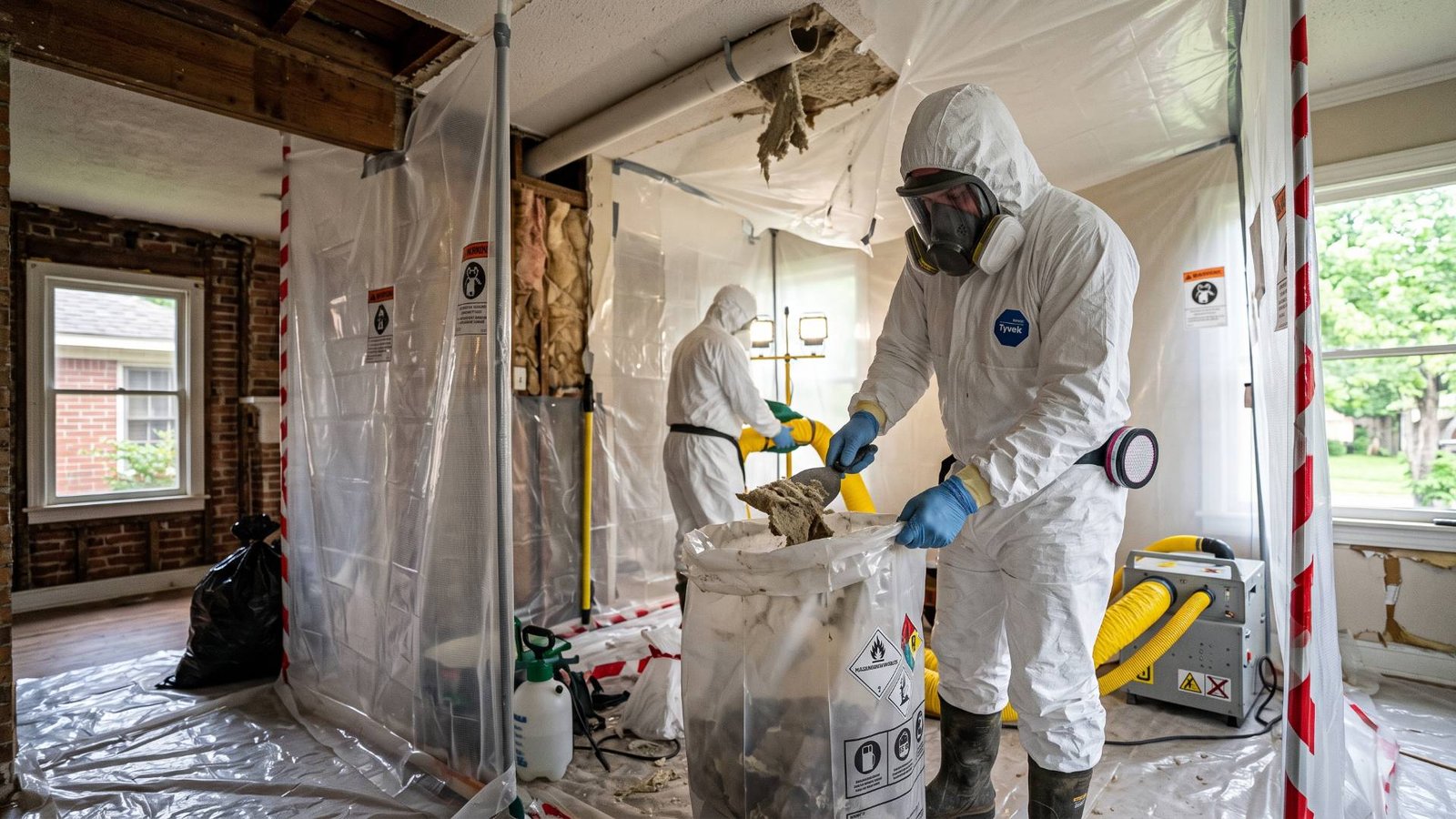
Finding a material that may contain asbestos can quickly raise questions, especially if you are planning repairs, remodeling, or demolition. You may be unsure whether the material contains asbestos, whether it needs attention, or what steps to take before moving forward with your project.
Asbestos was once used in a wide range of building materials because of its durability and heat resistance. As a result, it may still be present in older homes and commercial properties today. In Shreveport, this is especially important when working on older properties in established areas like Highland and Downtown, where original building materials may still be present.
The first step in dealing with asbestos safely is knowing exactly what you’re dealing with. We’ll walk you through how asbestos is identified, what your options are if it is found, how professional removal and disposal work, and what to consider when asbestos is discovered as part of a larger renovation.
What Is Asbestos and Why Can It Be Dangerous?
Understanding Asbestos-Containing Materials
Asbestos refers to a group of naturally occurring mineral fibers that were incorporated into various building and industrial products. These fibers were widely used because they offered heat resistance, durability, and insulation.
The level of concern often depends on the condition of the asbestos-containing material. Some asbestos-containing products are relatively solid, while others can become damaged or deteriorate over time.
This distinction matters because the fibers themselves are the primary concern. Understanding that relationship provides the foundation for making informed decisions about asbestos management.
Why Airborne Asbestos Fibers Matter
Asbestos fibers are microscopic, so if they become airborne, you can inhale them without realizing.
Asbestos exposure is associated with diseases including asbestosis, lung cancer, and mesothelioma. These conditions can have long latency periods, meaning illness may develop many years after exposure.
For this reason, asbestos safety focuses on preventing fibers from becoming airborne and spreading. Unlike many construction hazards, airborne asbestos cannot be reliably detected by sight or smell.
Where Might You Find Asbestos in an Older Property?
Now that we understand the underlying concern, the next question is where asbestos-containing materials may be located.
Common Building Materials Associated With Asbestos
Depending on when a property was built or renovated, asbestos may be present in older floor tiles and adhesives, pipe insulation, boiler insulation, roofing materials, siding, cement products, textured coatings, and certain ceiling or wall materials.
It may also be hidden beneath newer finishes. For example, a recently installed floor could cover older flooring or adhesive left from a previous renovation. Similarly, newer wall finishes may conceal older materials underneath.
This possibility is particularly relevant when renovating older Shreveport properties. A home in Highland or Broadmoor may have undergone several renovations over the decades, leaving layers of materials from different periods.
The important takeaway is not to assume that every older product contains asbestos. Instead, the type, location, and history of a material can help determine whether it warrants closer evaluation.
How Do You Know If a Material Contains Asbestos?
Knowing where asbestos might occur is useful, but identifying it requires a separate process. This section focuses specifically on confirming whether a suspect material contains asbestos.
Why Appearance Cannot Confirm Asbestos
You generally cannot identify asbestos accurately from appearance alone.
Two floor tiles can have similar dimensions and colors while containing different ingredients. The same problem applies to insulation, textured coatings, siding, and other materials.
Property age can provide context, but it is not proof either. Buildings are renovated over time, and materials may have been added or replaced long after the original construction.
Therefore, photographs, product comparisons, and visual guesses should not be treated as confirmation.
How Asbestos Testing Provides an Answer
When you need to know for certain, you can collect material samples and send them to a qualified laboratory for testing.
A professional asbestos inspection may first determine which materials are considered suspect and which areas of the property are likely to be affected by upcoming work. You can then carefully collect samples from the suspected materials for further testing.
Laboratory analysis provides information that visual inspection cannot. Once the results are available, you have a factual basis for deciding what needs to happen next instead of planning around an assumption.
What Should You Do If You Suspect Asbestos?
There is often a period between discovering a questionable material and receiving professional guidance or laboratory results. During that time, the goal is simple: avoid making the situation more complicated.
Do not continue working directly on the suspect material. For example, postpone drilling into it, removing sections, or performing other work that changes its condition.
If you discover the material after a renovation has already started, restrict additional work in that immediate area until you know what you are dealing with. You can then determine the next step based on professional evaluation rather than continuing demolition to investigate.
This temporary response is different from asbestos removal. You are not attempting to solve the entire problem yourself. You are simply preserving the existing conditions until you have enough information to make an informed decision.
Can You Remove Asbestos Yourself?
Once asbestos is confirmed, you may wonder whether you can remove it yourself. However, consider several important factors before deciding to handle the removal yourself.
Asbestos work may be subject to federal, state, and local requirements. Which rules apply can depend on factors such as the property type, material involved, renovation scope, and whether demolition is planned.
Asbestos work also requires specialized knowledge and practices that go beyond general construction experience. Being comfortable with flooring removal, drywall work, or demolition does not automatically mean you have the equipment, training, or procedures needed for asbestos abatement.
For these reasons, it’s equally important to understand the requirements for your specific project and consult a qualified asbestos professional before deciding how to proceed.
That approach separates the legal and practical question of who should perform the work from the identification question covered earlier.
Signs That Your Home May Need Testing
You cannot identify asbestos just by looking at it. Professional testing is recommended if:
- Your building was constructed before 1980
- You plan to remodel
- Materials appear damaged
- Water damage has affected ceilings or insulation
- You notice crumbling pipe insulation
- You're purchasing an older property
- Storm damage exposed building materials
Many Shreveport homeowners ask how much asbestos exposure is dangerous only after work has already started. Testing beforehand is always the safer option.
How Does Professional Asbestos Removal Work?
If removal is selected as the appropriate management method, professional asbestos abatement follows a structured process. Each stage serves a different purpose.
Step 1: Define the Scope
The first stage establishes exactly what needs to be addressed.
Professionals consider the location and quantity of confirmed asbestos-containing material, its condition, surrounding building components, and the construction work planned afterward.
A defined scope prevents unrelated materials from being included unnecessarily while ensuring affected areas are accounted for.
Step 2: Prepare the Abatement Plan
Once the scope is clear, the next step is to plan the work based on the specific conditions of the property.
Planning may cover worker protection, equipment, containment, removal methods, waste handling, cleanup procedures, and coordination with other contractors.
At this stage, the focus is on preparing the work area and planning the removal process.
Step 3: Establish the Controlled Work Area
Next, the work area is separated from unaffected portions of the property using controls appropriate to the project.
This establishes clear boundaries between the abatement operation and spaces outside the work zone. Access can also be limited to personnel involved in the asbestos work.
Step 4: Remove the Designated Materials
After preparation is complete, trained personnel remove the asbestos-containing materials identified in the project scope.
Asbestos-specific procedures and equipment are used according to the material and site conditions. Once removed, the material is carefully contained and prepared for proper handling and disposal.
Step 5: Complete Cleanup and Verification
Once removed, attention shifts to the work environment itself.
The affected area is cleaned according to the project's requirements. Depending on the type and scope of the work, additional inspections or clearance testing may be needed before the area can safely return to normal use.
This stage establishes a clear endpoint for the abatement work before other construction activities resume.
Does Asbestos Always Have to Be Removed?
Removal is one way to deal with asbestos, but it may not always be necessary or the best option.
Some asbestos-containing materials may remain in place when their condition, location, and future use make another management strategy appropriate.
One option is encapsulation, which includes treating or sealing the asbestos-containing material to help prevent fibers from being released. Another is enclosure, which places a physical barrier around the material to separate it from occupied areas.
The right approach depends on the material’s condition and location, as well as whether future repairs or renovations are likely to disturb it.
For example, intact asbestos-containing material in an area that will remain undisturbed may be managed differently from old flooring that needs to be removed during a renovation.
The goal is to choose the right way to manage the asbestos rather than assuming it always needs to be removed.
How Is Asbestos Waste Disposed Of?
After asbestos-containing material leaves its original location, it becomes a waste-management issue.
Asbestos waste should not automatically enter the same waste stream as drywall, lumber, flooring, and other routine construction debris. Depending on applicable requirements, the material may need specific packaging or containment, labeling, transportation, documentation, and disposal.
The destination matters as well. Facilities that accept ordinary construction debris may not necessarily accept regulated asbestos-containing waste.
That’s why waste handling should be part of the plan from the start. Your contractor should explain how the asbestos waste will be properly contained, transported, and disposed.
This phase addresses what happens after removal, keeping it distinct from the work practices used inside the property.
Planning Asbestos Work Before a Shreveport Renovation
Planning for asbestos becomes even more important when it is part of a larger renovation or construction project.
Suppose you are renovating an older Highland home, replacing floors in Broadmoor, or rehabilitating a commercial property near Downtown Shreveport. Your renovation may involve several contractors, inspections, material deliveries, and different stages of work, so an unexpected asbestos issue can quickly disrupt the schedule.
The practical solution is to place asbestos evaluation early in the project timeline.
For example, you can have any suspected asbestos-containing materials evaluated before demolition begins. If testing confirms asbestos, you can determine the management approach and complete any required abatement before the general renovation reaches the affected area.
The sequence becomes straightforward: evaluate the materials, obtain results, determine the appropriate response, complete necessary asbestos work, and then release the affected space for subsequent construction.
This approach is less about asbestos removal itself and more about project coordination. It gives you and the professionals working on your property a clearer understanding of when each phase can begin.
Choosing an Asbestos Abatement Professional in Shreveport
When professional asbestos work is needed, the final practical decision is choosing who will perform it.
Start by confirming that the company meets applicable Louisiana requirements for the type of asbestos work involved. Also, consider their asbestos-specific training, experience with similar projects, and insurance coverage.
Next, look at what each estimate includes rather than focusing on price alone. The proposal should clearly explain which materials and areas are included, what work will be performed, and what you can expect once the project is complete.
You can also ask how the work area will be managed, who will perform the abatement, how waste will be transported and disposed of, and what project documentation you will receive.
Asking these questions can help you understand what each contractor is actually offering. Since estimates can vary in both price and scope, reviewing the details makes it easier to compare your options and make an informed decision.
Getting Rid of Asbestos Starts With the Right Information
Getting rid of asbestos safely is best viewed as a series of informed decisions rather than a single removal task.
First, we need to understand where asbestos may be present and determine whether a questionable material actually contains it. If asbestos is confirmed, the next step is to determine the best way to manage it and who should handle the work. When removal is necessary, the process includes controlled abatement, thorough cleanup, and proper waste disposal.
For Shreveport property owners, addressing potential asbestos before a major renovation or demolition can help you plan the project more effectively and avoid unexpected issues once work begins.
Most importantly, you do not have to rely on appearance or guesswork. Identifying the material and understanding its condition can help you determine the safest and most appropriate next step for your property.
If you need asbestos removal in Shreveport, Alpha Abatement LLC can help you evaluate the situation and determine the appropriate next steps. Call (318) 553-5884 to discuss your asbestos removal needs and learn more about your options.